EN
EN

The Revolutionary Impact of Solar Power in Modern Business Operations
The transition to sustainable energy solutions has become a defining characteristic of forward-thinking businesses in today's competitive landscape. Industrial and commercial solar energy systems represent a transformative approach to power generation, offering organizations both environmental benefits and substantial economic advantages. As energy costs continue to rise and environmental regulations become more stringent, businesses across sectors are discovering the tremendous potential of solar technology to revolutionize their operations.
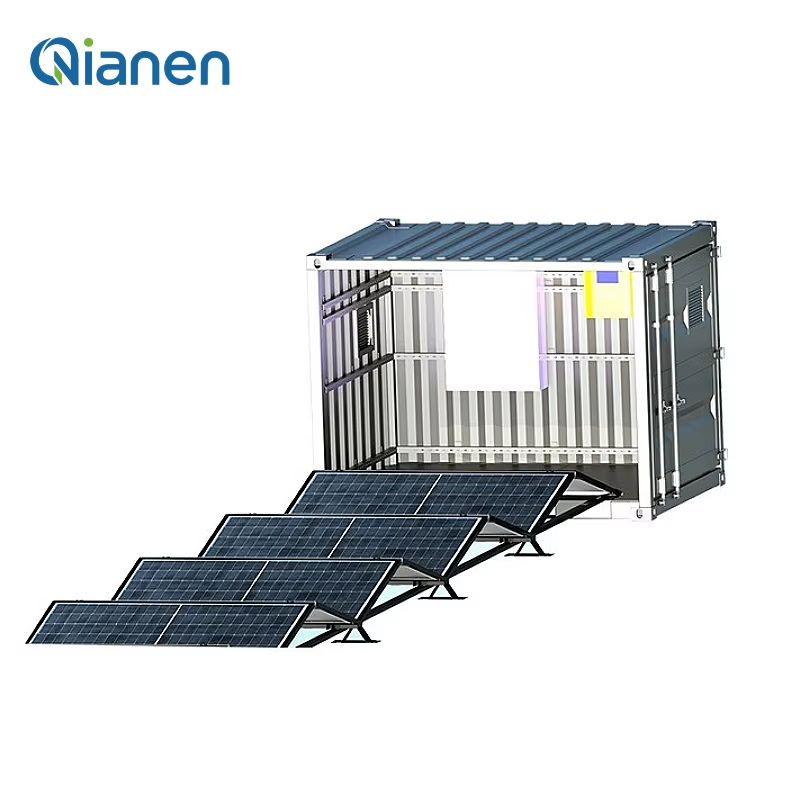
The adoption of industrial and commercial solar energy systems has experienced unprecedented growth, with installations doubling in the past five years alone. This surge reflects not just environmental consciousness, but a deep understanding of the long-term financial benefits these systems provide. From manufacturing facilities to office complexes, organizations are leveraging solar power to reduce operational costs, enhance energy independence, and demonstrate corporate responsibility.
Financial Benefits and Return on Investment
Immediate Cost Reduction and Long-term Savings
The implementation of industrial and commercial solar energy systems delivers immediate and substantial reductions in utility expenses. Businesses typically see a 50-75% decrease in their electricity bills from day one of installation. The initial investment in solar infrastructure is offset by these dramatic savings, with most systems achieving complete return on investment within 4-6 years.
Beyond immediate savings, these systems provide predictable energy costs for decades to come. While traditional electricity rates continue to climb at an average of 2-3% annually, organizations with solar installations can lock in their energy expenses, creating more accurate long-term financial forecasts and improved budgeting capabilities.
Tax Incentives and Government Support
Governments worldwide offer significant financial incentives for businesses adopting industrial and commercial solar energy systems. These include tax credits, accelerated depreciation benefits, and grants that can cover up to 30% of the initial installation costs. Such incentives substantially reduce the barrier to entry and accelerate the timeline to achieving positive returns on investment.
Additional state and local programs often provide performance-based incentives, rewarding businesses for the actual energy their systems produce. These ongoing benefits contribute to the overall financial appeal of commercial solar installations, making them an increasingly attractive option for businesses of all sizes.
Operational Advantages and System Reliability
Enhanced Energy Independence
Industrial and commercial solar energy systems provide businesses with unprecedented control over their power supply. By generating electricity on-site, organizations reduce their dependence on the traditional power grid and protect themselves against power outages and price volatility. This energy independence is particularly valuable for manufacturing facilities and data centers where continuous operation is critical.
Modern solar installations can be integrated with battery storage systems, allowing businesses to maintain operations even during periods of low solar production or grid failures. This combination of solar generation and energy storage creates a robust power solution that enhances operational resilience and business continuity.
Minimal Maintenance Requirements
One of the most compelling aspects of industrial and commercial solar energy systems is their remarkably low maintenance needs. With no moving parts and durability designed for decades of operation, these systems typically require only basic annual inspections and occasional cleaning to maintain optimal performance. This minimal maintenance translates to lower operational costs and reduced facility management burden.
Modern solar panels are engineered to withstand severe weather conditions and continue producing energy efficiently for 25-30 years. Many manufacturers provide comprehensive warranties covering both equipment and performance, ensuring businesses can rely on consistent energy production throughout the system's lifetime.
Environmental Impact and Corporate Responsibility
Carbon Footprint Reduction
The environmental benefits of industrial and commercial solar energy systems extend far beyond individual business operations. A typical commercial solar installation can offset hundreds of tons of carbon dioxide emissions annually, equivalent to planting thousands of trees. This significant reduction in carbon footprint helps organizations meet increasingly stringent environmental regulations and demonstrate tangible commitment to sustainability goals.
The adoption of solar energy also reduces other forms of environmental impact associated with traditional power generation, including water consumption and air pollutants. This comprehensive environmental benefit positions businesses as leaders in corporate sustainability and environmental stewardship.
Enhanced Brand Value and Stakeholder Relations
Companies investing in industrial and commercial solar energy systems often experience enhanced relationships with customers, employees, and investors who increasingly prioritize environmental responsibility. The visible commitment to renewable energy can strengthen brand reputation and create competitive advantages in markets where environmental consciousness influences purchasing decisions.
Organizations with robust solar initiatives often find it easier to attract and retain environmentally conscious employees and secure partnerships with like-minded businesses. This alignment of operational practices with stakeholder values creates long-term benefits that extend beyond direct financial returns.
Frequently Asked Questions
What is the typical lifespan of commercial solar energy systems?
Industrial and commercial solar energy systems are designed to operate efficiently for 25-30 years, with many systems continuing to produce significant energy beyond this period. Modern panels typically retain 80% or more of their original production capacity even after 25 years of operation.
How do weather conditions affect solar system performance?
While solar panels produce more energy on sunny days, they continue to generate electricity even in cloudy conditions. Modern industrial and commercial solar energy systems are engineered to perform efficiently across various weather conditions and include sophisticated monitoring systems to optimize production regardless of environmental factors.
Can businesses operate solely on solar power?
While it's possible for businesses to operate entirely on solar power, most industrial and commercial solar energy systems are designed to work in conjunction with the traditional power grid. This hybrid approach ensures continuous power availability while maximizing the benefits of solar generation. The integration of battery storage systems can further increase energy independence and system reliability.